Find the parent colony and the satellite, not just the ants you see.
Carpenter ants don't eat wood like termites, they excavate it to nest, and the damage adds up. Real carpenter ant treatment finds the parent colony (usually outdoors) and the satellite colony (indoors), then treats both.
Carpenter ants are among the largest ants in Arizona. University of Arizona Cooperative Extension describes workers from about a quarter inch to a half inch long, black or red and black, and most active after sunset. Extension classifies them as structural pests because they hollow out wood to nest in it.
They prefer moist, softened wood. Extension notes that colonies inside buildings are often tied to water leaks: porch pillars, areas around bathtubs and sinks, roof leaks, poorly flashed chimneys and poorly sealed windows and door frames. Outdoors they nest in decayed wood such as old firewood, stumps, logs, dead trees and landscape timbers. When a colony is established outside within about 300 feet of a building, satellite colonies can form inside.
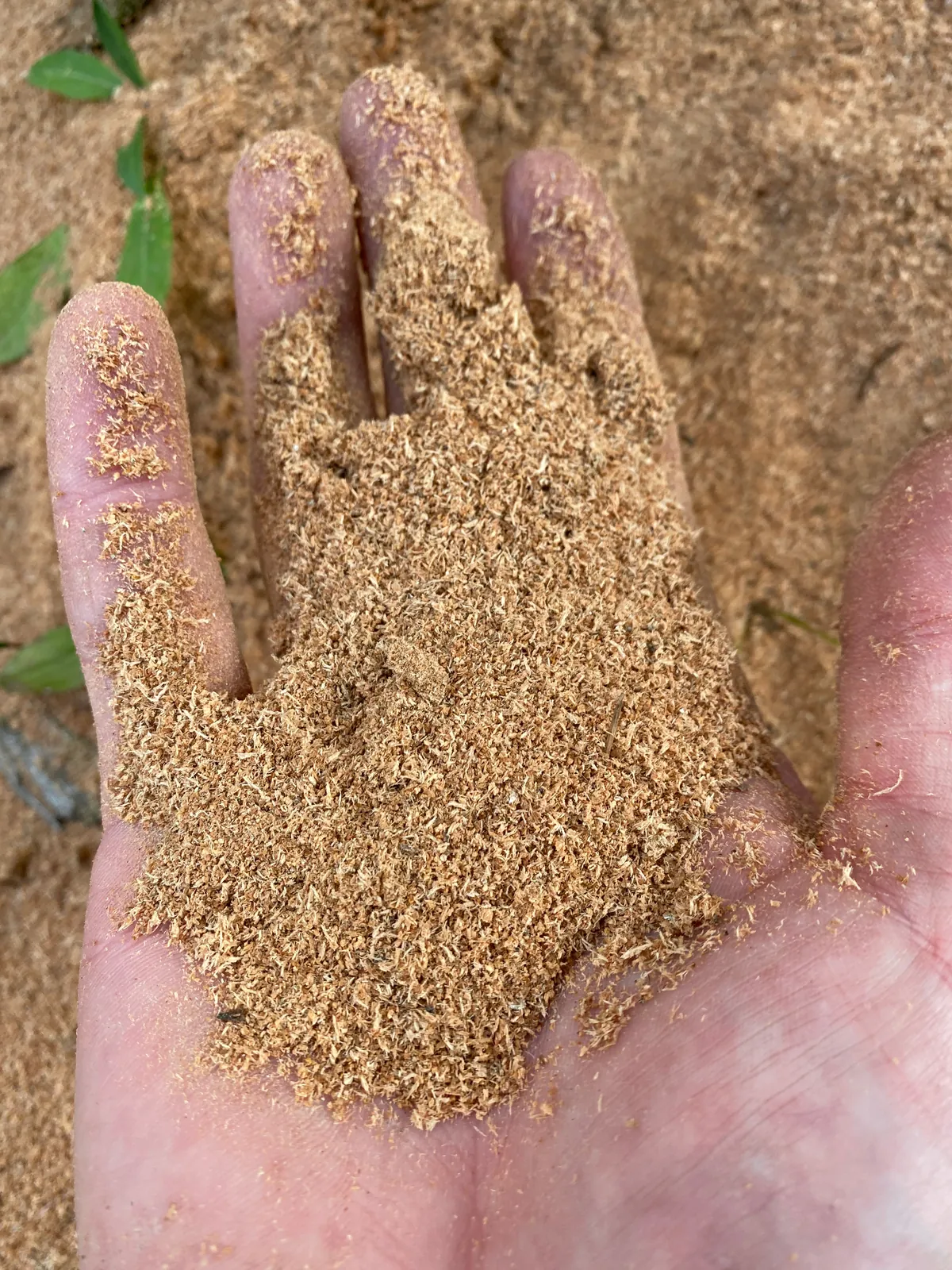
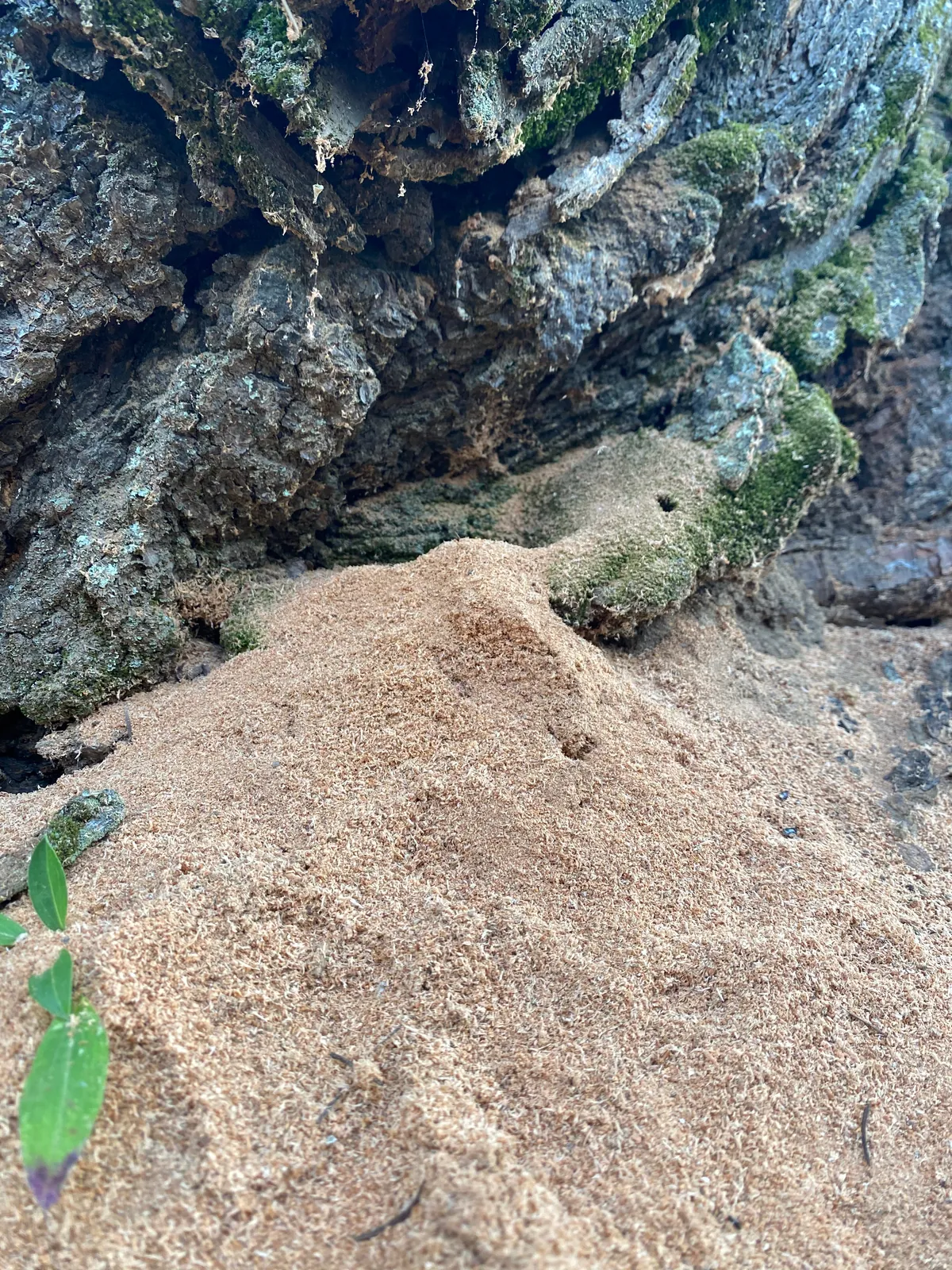
Seeing a few large ants indoors does not always mean they are nesting inside. Extension notes they may simply be foraging. These signs point to a nest:
Extension guidance stresses that finding and destroying the nest is the key step, and that killing foraging ants alone does not solve the problem. So a Service Pro checks wet areas inside first, then traces trails outside to stumps, firewood and landscape timbers. Baits are chosen for carpenter ants specifically, since a bait made for one ant species will not control them all.
Fixing leaks, keeping firewood off the ground and away from the foundation, and keeping mulch off wood siding all help stop new colonies from settling in. If ordinary trailing ants turn out to be the real issue, our ant control service is the better fit. If the damage looks like termites, we will tell you and point you to termite treatment. Learn more about Arizona ants.
University of Arizona Cooperative Extension names the western carpenter ant as a common carpenter ant in Arizona. It is black with dark red legs, workers run a quarter inch to a half inch long, and queens reach about three quarters of an inch. Extension describes carpenter ants as a common nuisance and an occasional biting and structural pest. They do not sting, but their strong jaws can bite, and they spray formic acid into the bite, which burns.
Their tunnels are easy to mistake for termite damage. Extension notes that carpenter ant tunnels are clean and smooth, with no soil inside and no termite mud tubes. A large colony can also spread into satellite nests up to about 300 feet from the parent nest, so the ants on your kitchen counter may be coming from a nest in a nearby tree, stump or woodpile.
In the White Mountains, many cabins and homes in Show Low, Pinetop-Lakeside and Heber-Overgaard are log or wood frame construction, with decks, porches and firewood close to the house. When any of that wood stays damp from a roof leak, snowmelt or contact with the soil, our Service Pros check it closely for carpenter ant activity.
Talk to an Office Pro if you find piles of shavings, see big ants indoors at night more than once, or spot winged ants inside in spring. Mention any known leaks or soft wood, and they can set up a visit and a free custom quote.
Sources: University of Arizona Cooperative Extension: Ants (Yavapai County); University of Arizona Cooperative Extension: Pest-proofing Your Home (AZ1677); University of Arizona Cooperative Extension: Ants In Your Pants? (Home and School IPM Newsletter, May 2024)
Inspection to locate parent and satellite colonies.
Non-repellent residual + targeted bait at colony locations.
Moisture and conducive-condition recommendations.
Serving
Call or text us, we answer both. Or send us your details and we'll come back with a free custom quote.
No. Carpenter ants are treated differently than subterranean termites, different products, different placements, different inspection focus. We do both.
Look inside the damaged wood. University of Arizona Extension says carpenter ant tunnels are clean and smooth with no soil inside and no termite mud tubes. Subterranean termite damage usually has soil in it and mud tubes nearby. A Service Pro can confirm which one you have.
They do not sting, but they can bite. University of Arizona Extension notes that carpenter ants spray formic acid into the bite, which causes a burning feeling.
Usually not. The ants you see are foragers, and University of Arizona Extension notes a colony can have satellite nests up to about 300 feet from the parent nest. That is why a Service Pro traces trails back to the nests instead of only treating the ants in view.
It is a treatment aimed at the nests of large wood nesting ants, both the main colony outdoors and any satellite colony in the walls, along with the moisture problems that attract them.
Your Service Pro looks for damp wood and shavings inside, follows ant trails outdoors, and places carpenter ant baits and treatment where the nests are. You will hear which leaks or wood contact points to fix, and a later visit checks whether activity has stopped.